
CUNJC Cambridge
Summer School Programme
Academic programme • Team projects • Professional development
Focused on applied quantitative fields that power today's data-driven economy — data science, AI, economics and finance — our Academic Programme connects theory with practice from day one. A one-week online prep course (maths, stats and coding basics) precedes arrival. Each two-week course combines daily lectures and practical Python/R classes with team projects, producing skills directly transferable to postgraduate study and data-intensive roles.
Programme overview
Academic programme
Data Science & AI courses
Learn the quantitative tools — from maths and stats to ML and AI — that power modern analysis and research.
Mathematical methods
Statistical methods
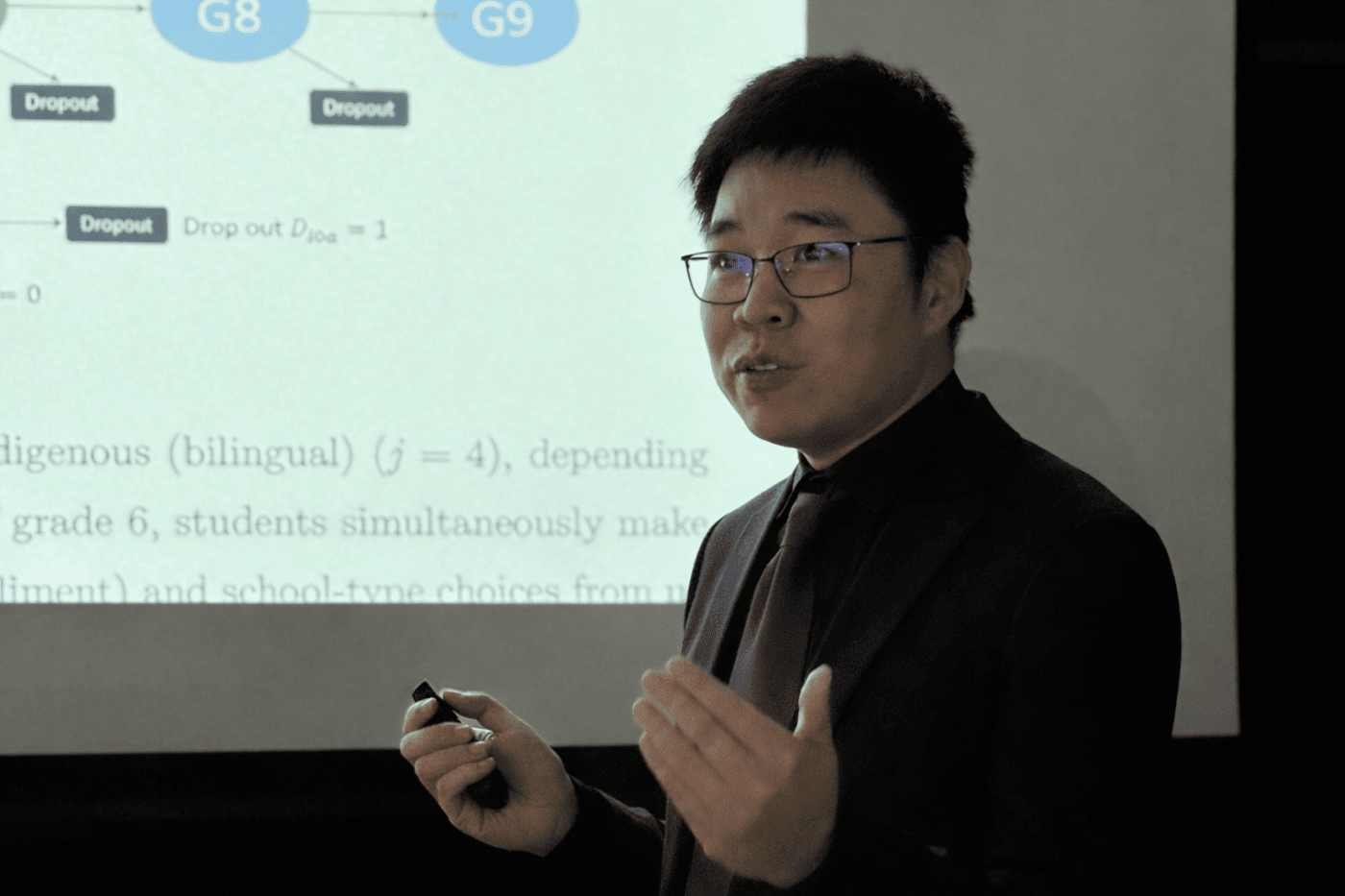
Causal data science
Econometrics
Machine learning
Artificial intelligence
Economics & Finance courses
Apply models and data-driven methods to understand markets, economies, networks, and systemic risks.
Microeconomics
Macroeconomics
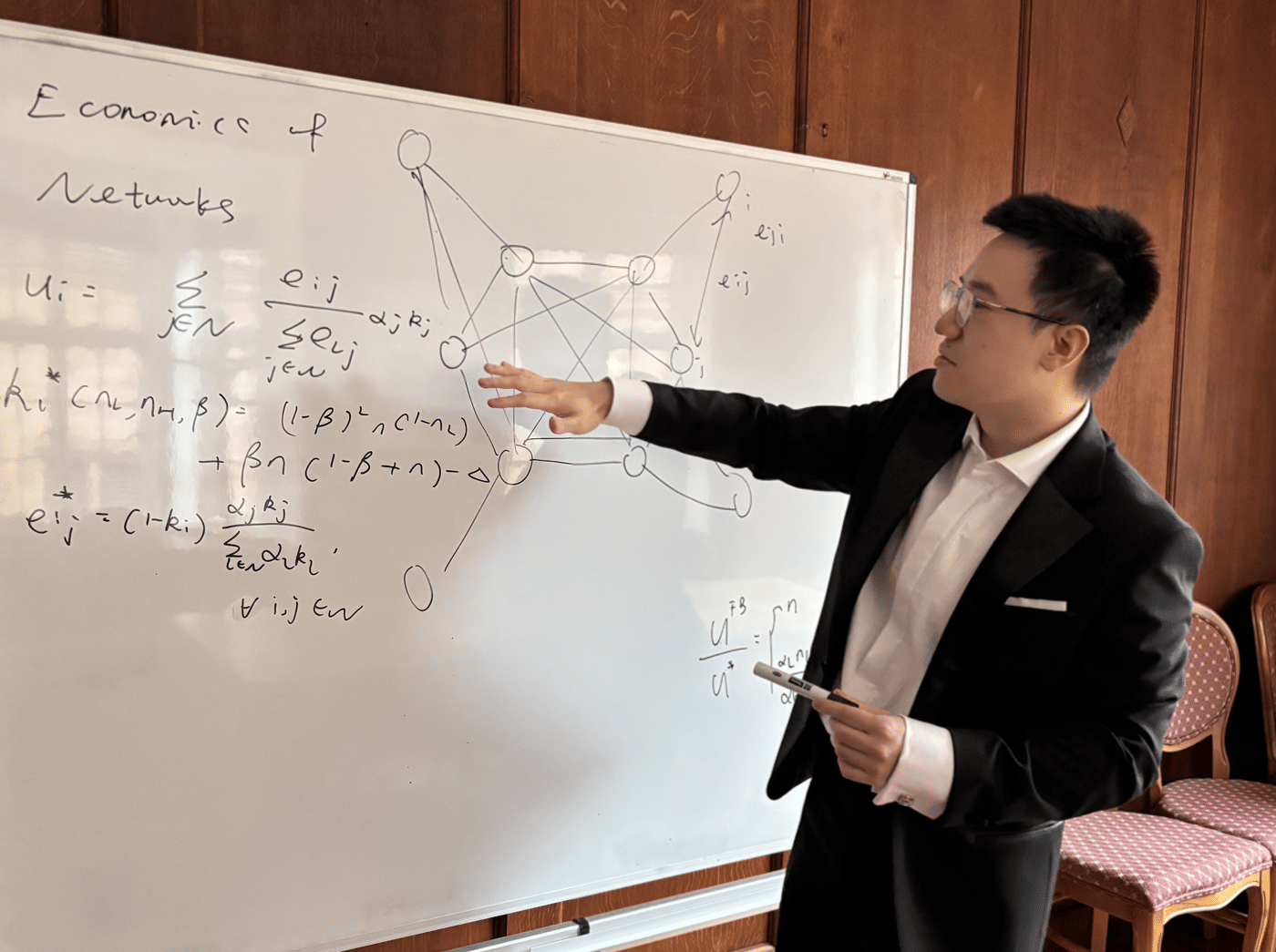
Network economics
Complexity economics
Quantitative finance
Financial markets
A day in the academic programme
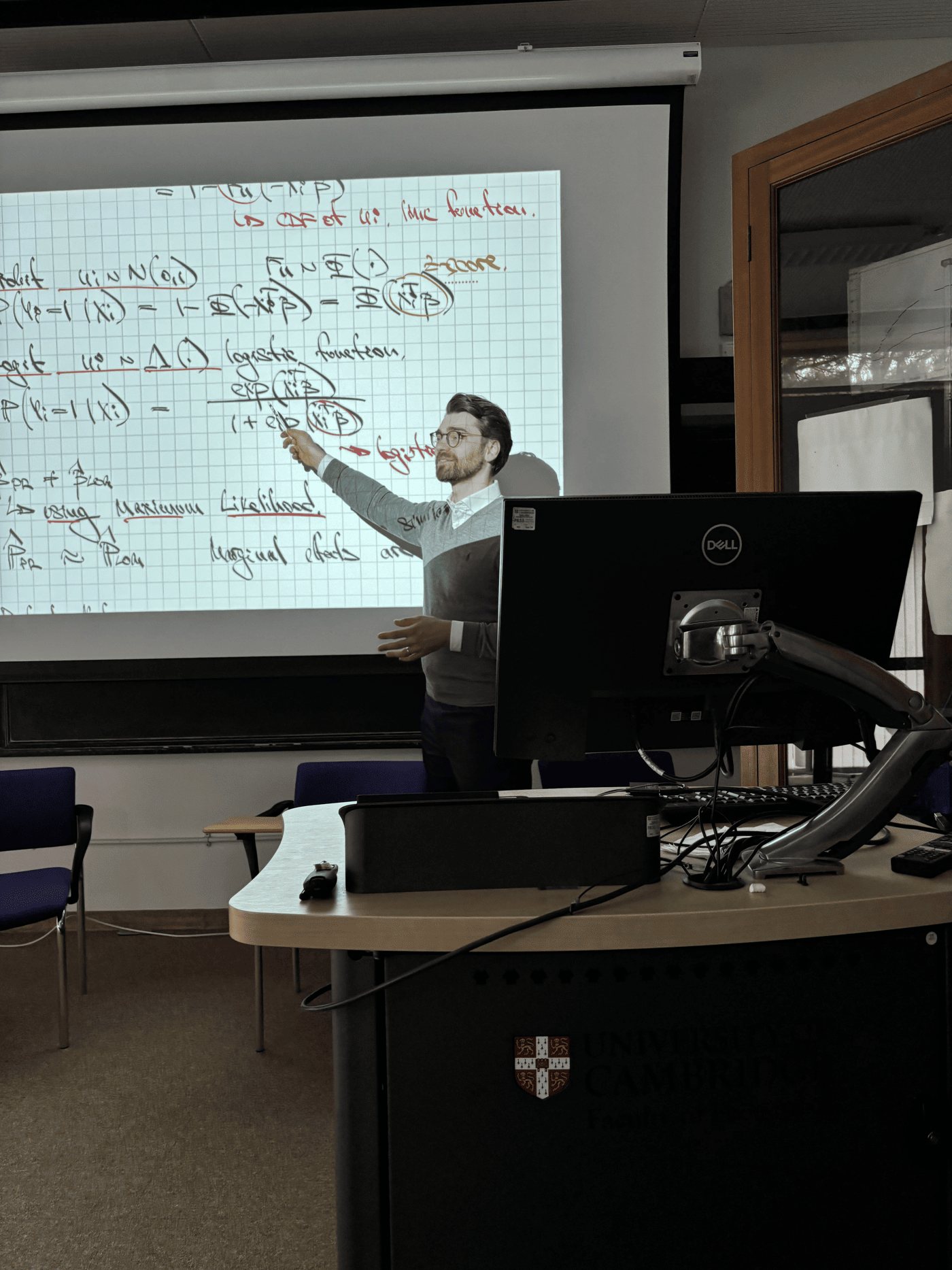
Sample day: Causal data science
Lecture
Idea
Diff-in-diff compares changes over time between a treatment and a control groupDemo
Use diff-in-diff to estimate whether free school meals improve student test scoresData
Online UK Education Endowment Foundation (EEF) school trial datasetCode
Analyse treatment × post-intervention effects using statsmodels in PythonClass
Practice
Use diff-in-diff to assess how Uber affected taxi employment across UK citiesGuidance
Estimate treatment effect, conduct testing, interpret results, discussData
UK Labour Force Survey (LFS) data for taxi drivers before and after Uber entryCode
Diff-in-diff in Python, pandas for data prep and statsmodels for estimation.Team projects

Challenge
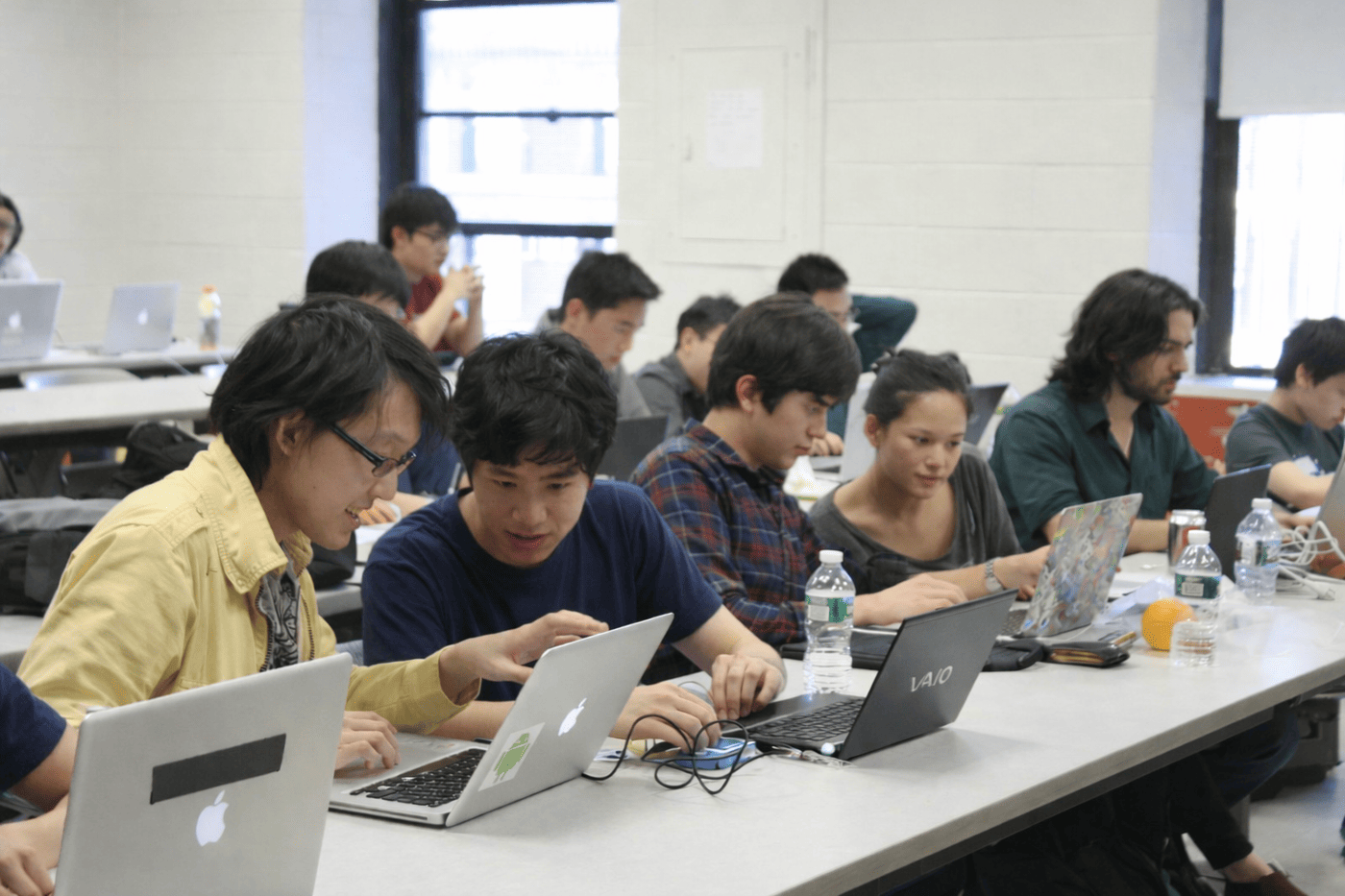
Fast and focused: one week, one module, one project.Applied projects: apply classroom methods and Python/R tools to real data.
Impactful themes: tackle hot topics in economics, finance, data science and AI.
Process
Small teams: work in mixed roles across analysis, coding, writing, and visuals.Real-world workflow: plan together, split tasks, integrate, and review.
Live coaching: receive daily guidance and feedback from instructors.

Outcome
Shareable output: produce visuals, a slide deck, and a one-page summary.Showcase finish: deliver a short demo to explain what you built and why it matters.
Portfolio-ready: graduate with a project you can show to employers / grad schools.
Sample project: Machine learning
Title
Clustering cryptocurrency bubbles.Goal
Detect bubble episodes in crypto markets to uncover patterns in their formation and collapse.Data
Daily prices, returns, and trading volume for Bitcoin, Ethereum, and major altcoins.Method
k-means clustering, PCA, rolling-window volatility measures, anomaly detection.Code
Python pandas/numpy for data, scikit-learn for clustering, matplotlib / seaborn for visuals.Output
A portfolio-ready analysis of crypto bubble dynamics with cluster profiles (demo + report).Professional development
Keynote lectures
Hear Cambridge professors connect economics, finance and AI research to insights you'll apply to global challenges in projects and real life.
Career talks
Gain first-hand career insights from industry leaders in AI , finance, and economics through talks and panels on real-world challenges.
Leadership coaching
Work with professional coaches in interactive workshops to develop your leadership, confidence, resilience and collaboration skills.
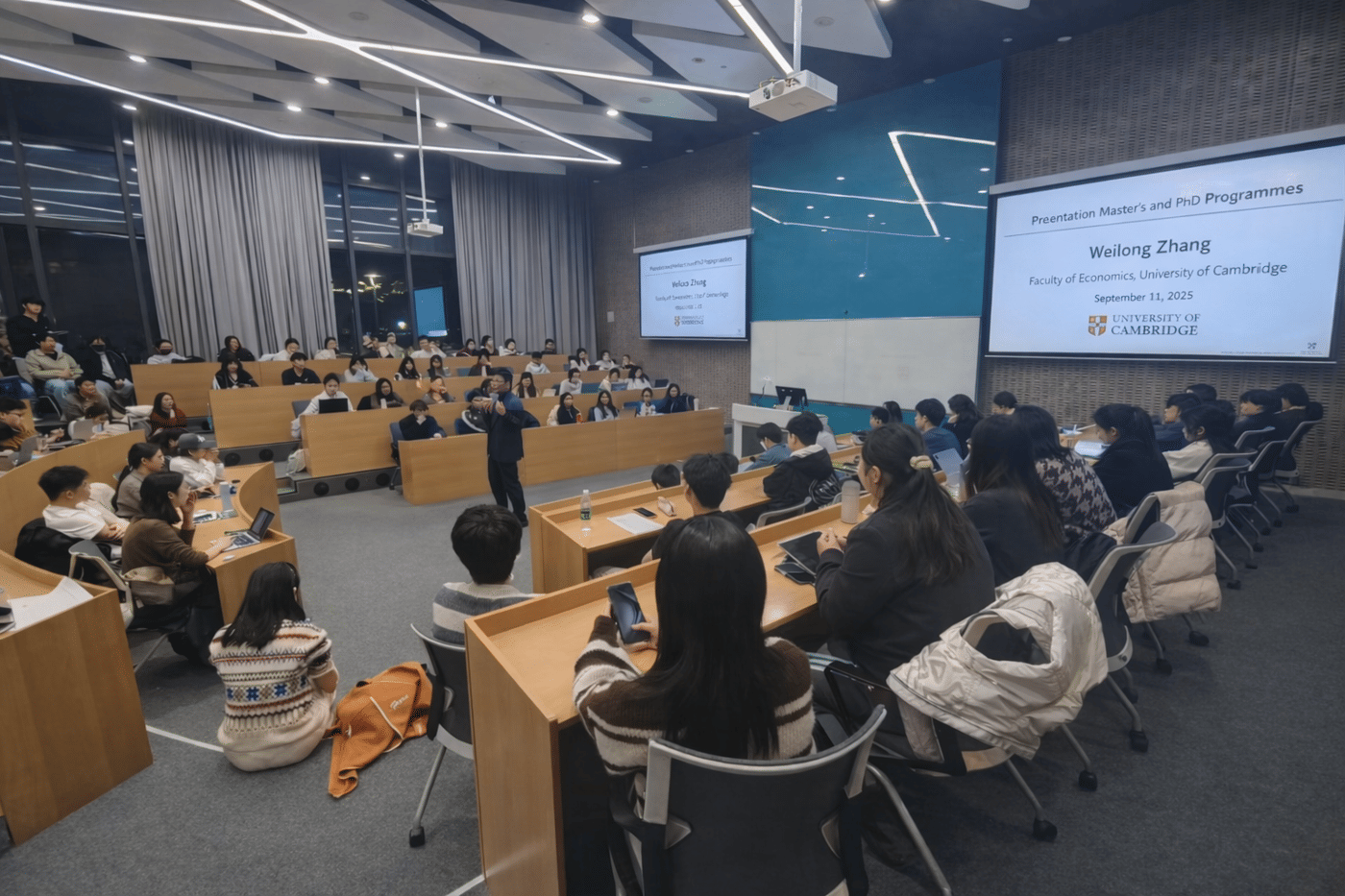
Admission workshop
Get insider guidance from Cambridge academics and admissions experts on applications, selection criteria and strategies to secure master’s or PhD places worldwide.Confirmed speakers

Romans PopovsVP M&A Customers & Products, Trading & Shipping at BP

Ayoub SemaanPartner at Cultivating Leadership, a professional training firm

Maksim SiposCo-founder and CTO at causaLens, a leading AI company
Academic programme courses
We run two sessions in Cambridge: Session One, 1–16 August, and Session Two, 16–30 August. In each session we offer all 12 of our courses. You can join us for one or both sessions, choosing one course per session. Every course runs for two weeks and combines lectures, small-group classes and team projects. Data Science & AI
DS-1: Data Science for Economics and Business
For students with no programming background, this course introduces the core tools of applied econometrics, namely regression, statistical inference, experiments and difference-in-differences, and uses them to separate correlation from causation in real economic and business data.
For students with no programming background, this course introduces the core tools of applied econometrics, namely regression, statistical inference, experiments and difference-in-differences, and uses them to separate correlation from causation in real economic and business data.
DS-2: Machine Learning for Prediction
For students who already know linear regression and basic matrix algebra, this course covers the main supervised learning methods, from regularised regression to decision trees and ensembles, together with the validation discipline needed to trust their predictions and turn them into decisions.
For students who already know linear regression and basic matrix algebra, this course covers the main supervised learning methods, from regularised regression to decision trees and ensembles, together with the validation discipline needed to trust their predictions and turn them into decisions.
AI-1: Applied AI for Business and Management
For students with no programming background, this course covers what large language models and other AI tools can and cannot do, and how organisations test, deploy and govern them, ending with students building and evaluating a quantitative case for using AI in a real business process.
For students with no programming background, this course covers what large language models and other AI tools can and cannot do, and how organisations test, deploy and govern them, ending with students building and evaluating a quantitative case for using AI in a real business process.
AI-2: Deep Learning and Large Language Models
For students with some calculus, statistics and Python, this course builds neural networks, backpropagation and attention from first principles and ends with students training a small transformer language model and fine-tuning a pretrained one.
For students with some calculus, statistics and Python, this course builds neural networks, backpropagation and attention from first principles and ends with students training a small transformer language model and fine-tuning a pretrained one.
Economics & Finance
FI-1: Financial Markets and Investment
For students with no prior background in finance, this course introduces how stock markets price risk, from returns, volatility and diversification to portfolio choice, the CAPM and multi-factor models, and applies these ideas to real stock market data.
For students with no prior background in finance, this course introduces how stock markets price risk, from returns, volatility and diversification to portfolio choice, the CAPM and multi-factor models, and applies these ideas to real stock market data.
FI-1: Quantitative Finance with AI
For students who know linear regression and introductory finance, this course builds and backtests quantitative trading strategies, from factors to volatility modelling, and shows how AI, from machine learning on prices to language models on financial text, can improve return forecasts and portfolio decisions.
For students who know linear regression and introductory finance, this course builds and backtests quantitative trading strategies, from factors to volatility modelling, and shows how AI, from machine learning on prices to language models on financial text, can improve return forecasts and portfolio decisions.
EC-1: Data-Driven Macroeconomics
For students with no prior background in economics, this course explains how economies grow, fluctuate and respond to policy, from productivity, technology and the promise of AI to inflation, interest rates and public debt, using real data from economies around the world.
For students with no prior background in economics, this course explains how economies grow, fluctuate and respond to policy, from productivity, technology and the promise of AI to inflation, interest rates and public debt, using real data from economies around the world.
EC-2: The Microeconomics of AI
For students who know linear regression and introductory economics, this course uses microeconomic models and evidence to analyse how AI changes the tasks workers do, the decisions firms make and the way markets compete, from automation and productivity to algorithmic pricing, platforms and regulation.
For students who know linear regression and introductory economics, this course uses microeconomic models and evidence to analyse how AI changes the tasks workers do, the decisions firms make and the way markets compete, from automation and productivity to algorithmic pricing, platforms and regulation.